2026-10-27 · Tony Vargas
How to Handle Yard Waste After Fremont Winter Storms
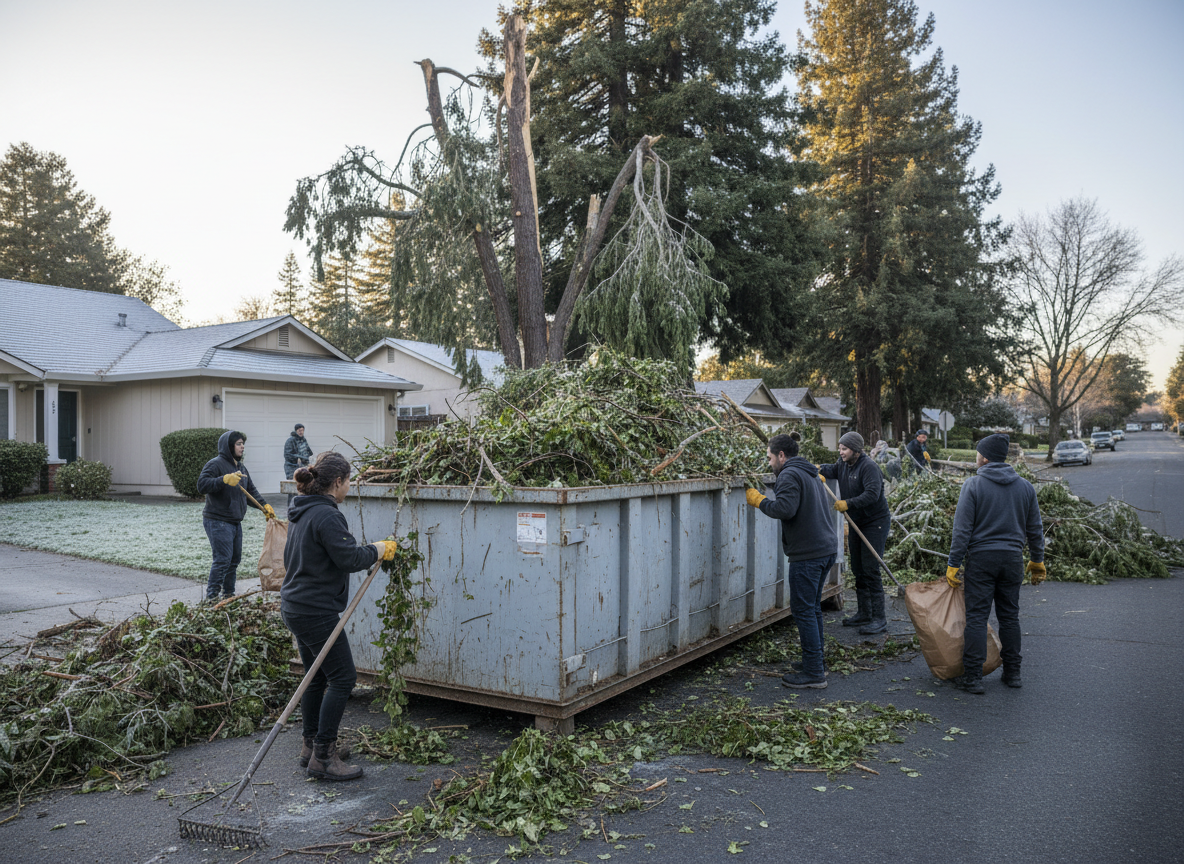
After Fremont winter storms drop branches and leaves from older trees in neighborhoods like Niles and Irvington, the fastest way to clear yards is to sort debris by type then load it into a rented dumpster sized for the volume. Homeowners in Alameda County often see 2–4 cubic yards of material from a single storm event on properties with mature oaks and eucalyptus near Lake Elizabeth. Acting within 7–10 days prevents mold growth and keeps storm drains clear in low-lying spots around Warm Springs.
Assessing Storm Damage in Fremont Yards
Walk the property starting at the street and move toward the house to identify piles of wet leaves, broken limbs, and scattered mulch. In older housing stock built before 1970 in Centerville and Downtown Fremont, root systems near foundations can shift during heavy rain, pulling more debris into the yard. Note any material touching power lines or blocking sidewalks in Mission San Jose, because these spots require extra caution before removal. Measure the largest limbs by diameter; anything over 4 inches usually needs cutting into 3-foot sections to fit standard container openings. This quick inventory helps decide whether a 10-yard or 20-yard unit will handle the load without overflow.
Sorting Yard Waste for Efficient Removal
Separate clean green waste such as leaves and small twigs from treated lumber or painted fence sections that cannot go into green-waste streams. Place rocks, dirt clods, and concrete chunks in a separate pile because they add weight and may require a different container or landfill drop-off. In areas near Niles Canyon Railway where soil stays damp longer, expect extra mud caked onto roots that increases total tonnage. Bag only the finest leaf litter; loose material loads faster and leaves more room in the dumpster. Keep metal, plastic, and household trash out of the green pile to avoid rejection at local transfer stations.
Selecting the Right Dumpster Size
A 10-yard container handles most single-storm cleanups from a typical 6,000-square-foot lot in Irvington or Warm Springs, while properties with multiple mature trees may need a 20-yard unit. Measure the pile height and length before ordering; a stack 4 feet high by 8 feet long usually fits in the smaller size. Residential Dumpster Rental lets homeowners place the container on the driveway rather than the street, avoiding the need for a city permit in most cases. For jobs that mix yard waste with renovation debris, review the Dumpster Rental Size Guide for Fremont Home Renovations to match container dimensions to the combined load.
Local Rules for Street-Placed Containers
If the driveway cannot accommodate the dumpster, check Fremont’s rules for street placement, especially on narrower roads in Downtown Fremont and Centerville. Place reflective cones at both ends and keep the unit at least 5 feet from fire hydrants. The Fremont Permit Requirements for Street-Placed Dumpsters page lists the exact paperwork and fees required when the container sits on public right-of-way. Schedule delivery for a weekday morning so the unit can be swapped or removed before the weekend if the storm cleanup finishes early.
Timing Pickup After the Storm Passes
Call for delivery the day after rain stops so the ground firms up and the truck can back into driveways without rutting lawns in Newark or Union City. Most loads are ready for haul-away within 5–7 days once material is cut and stacked. Keep the lid closed each evening to prevent wind from scattering lighter debris into neighboring yards near Lake Elizabeth. If additional rain is forecast, cover the open top with a tarp secured by bungee cords to keep the load dry and under weight limits.